
What Is Heavy-Vehicle Remanufacturing?
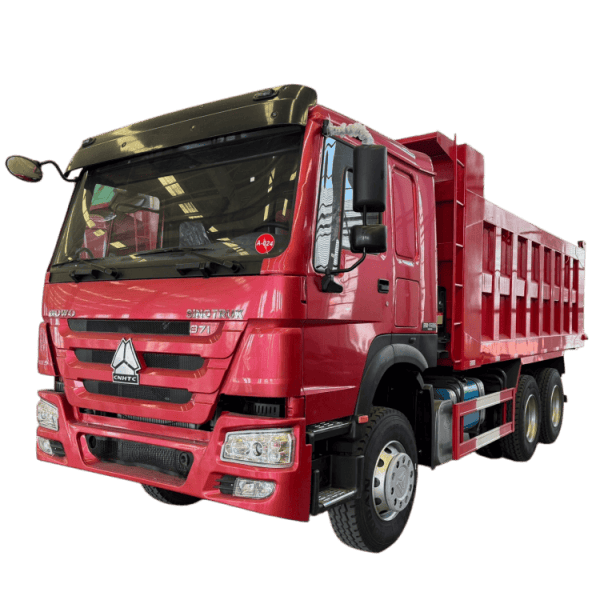
Overview
Remanufacturing is no longer a niche industrial practice — it has become a core strategy for heavy-duty fleet operators, equipment manufacturers and sustainability-driven enterprises worldwide. Remanufacturing represents a systematic engineering process that takes an end-of-service vehicle apart component by component, eliminates accumulated fatigue, renews critical parts and rebuilds the asset to a near-new performance baseline. This guide explains what remanufacturing really is, how it differs from repair or refurbishment, what happens inside a standard reman line, and why it matters for fleets facing rising capital costs, tightening environmental regulations and pressure to deliver predictable uptime.
Table of Contents
- The Core Definition of Heavy-Vehicle Remanufacturing
- How Remanufacturing Differs from Repair, Overhaul and Refurbishment
- Why Remanufacturing Matters for Heavy-Vehicle Fleets?
- The Standard Heavy-Vehicle Remanufacturing Workflow
- Component-Level Remanufacturing: What Happens to Critical Systems?
- Quality Control, Testing and Traceability
- Environmental and Economic Impact
- Common Misconceptions About Heavy-Vehicle Remanufacturing
- How Fleets Should Evaluate a Remanufactured Vehicle?
- Future Trends in Heavy Vehicle Remanufacturing
The Core Definition of Heavy Vehicle Remanufacturing
Before comparing remanufacturing with other maintenance approaches, it is essential to establish a clear definition. In the heavy vehicle industry, remanufacturing is not a marketing label applied to a repaired truck — it is a defined industrial process with measurable technical boundaries.
Full Disassembly to Component Level
- A reman vehicle is stripped completely, not just the assemblies that appear to be faulty.
- Every part is exposed to inspection, cleaning and measurement, including components hidden inside the engine, gearbox and frame.
- This depth of disassembly is what separates reman from overhaul, which typically opens only broken units.
Component Screening and Decision Logic
- Each component is classified into one of three categories: reusable after restoration, repairable to specification, or rejected for scrap.
- Decisions are based on dimensional measurement, non-destructive testing and material-fatigue assessment, not visual appearance alone.
- This classification step is the technical heart of vehicle remanufacturing.
Performance Reset to Factory Benchmark
- The objective is not merely to make the truck run again, but to restore whole-vehicle performance to a defined near-new baseline.
- Parameters such as engine power, braking efficiency, chassis geometry and hydraulic pressure are recalibrated against original OEM specifications.
- The result is a reset asset with a new lifecycle starting point, rather than a continuation of the original aged service curve.
Documented and Traceable Process
- Every inspection, machining operation, part replacement and test result is recorded.
- Traceability allows buyers, auditors and fleet managers to verify what was actually done to the vehicle.
- Without documentation, “remanufacturing” remains an unverifiable claim.
How Remanufacturing Differs from Repair, Overhaul and Refurbishment?
The heavy-vehicle market is flooded with overlapping terms. Buyers often cannot distinguish a genuinely remanufactured vehicles from a cosmetically refurbished one. Understanding these differences is the first step toward avoiding costly purchasing mistakes.
Routine Repair
- Scope: Fixes a specific fault such as a broken water pump or a leaking oil seal.
- Depth: Only the faulty component is opened; the rest of the vehicle remains untouched.
- Outcome: The truck returns to service with existing wear still present elsewhere.
- Objective: Restore basic drivability, not reset overall asset condition.
Major Overhaul
- Scope: Rebuilds one or several major assemblies, typically the engine, gearbox or axles.
- Depth: Disassembles those assemblies but does not treat the whole vehicle.
- Outcome: The rebuilt assembly performs better, but hidden fatigue in the frame, suspension and hydraulics remains.
- Objective: Extend residual life, not create a new lifecycle baseline.
Cosmetic Refurbishment
- Scope: Repainting, interior cleaning, minor accessory replacement.
- Depth: Almost no internal mechanical work.
- Outcome: The truck looks new but carries all inherited wear and defects.
- Objective: Improve sale appearance, not mechanical performance.
Standard Remanufacturing
- Scope: Full-vehicle disassembly, component-level screening, system-wide renewal and recalibration.
- Depth: Every assembly is opened, inspected and tested; hidden fatigue is proactively eliminated.
- Outcome: Near-new whole-vehicle performance with a reset service lifecycle.
- Objective: Restore asset to a factory-grade performance benchmark, supported by traceable records.
Why Remanufacturing Matters for Heavy-Vehicle Fleets?
Fleet operators do not choose remanufacturing for ideological reasons — they choose it because it solves concrete operational and financial problems. The value proposition spans capital efficiency, uptime reliability and sustainability compliance.
Lower Capital Expenditure
- A remanufactured vehicle typically costs a fraction of a brand-new unit.
- Fleets can expand or renew their vehicle assets without proportionally increasing capital outlay.
- This is especially valuable for project-based fleets with cyclical demand.
Predictable Uptime
- Formal remanufacturing eliminates hidden fatigue defects that cause sudden roadside failures.
- With critical components screened and renewed, reman vehicles deliver more predictable operating schedules.
- Reduced unplanned downtime directly improves project delivery and revenue.
Extended Useful Asset Life
- Instead of scrapping a structurally sound vehicle, reman extends its productive lifecycle by years.
- High-value assets such as frames, cabins and major castings continue to serve additional duty cycles.
- This converts potential scrap into ongoing earning capacity.
ESG and Circular Economy Alignment
- Remanufacturing preserves embedded industrial value and reduces raw-material demand.
- Carbon emissions from reman are significantly lower than from new-vehicle production.
- Documented reman processes provide verifiable data for corporate sustainability reporting.
Residual Value Stability
- A properly remanufactured vehicle with traceable records holds residual value better than an unproven used truck.
- When the fleet later disposes of the asset, reman documentation supports a clearer valuation.
The Standard Heavy Vehicle Remanufacturing Workflow
A consistent, repeatable workflow is what turns remanufacturing from a skilled craft into an industrial process. The following stages represent the standard sequence that reputable reman lines follow for heavy commercial vehicles.
Stage 1: Incoming Asset Qualification
- Every candidate vehicle undergoes historical review, visual inspection and dimensional check before acceptance.
- Units with irreparable frame cracks, catastrophic structural damage or major collision history are rejected.
- Qualified vehicles enter the reman line with an individual traceability file.
Stage 2: Complete Disassembly
- The vehicle is stripped down to individual components; no assembly is left partially assembled.
- Powertrain, chassis, cab, suspension, braking and hydraulic systems are separated for dedicated processing.
- Fasteners, hoses and small parts are sorted and tagged for traceability.
Stage 3: Precision Cleaning
- Components are cleaned using industrial washing, chemical treatment or high-pressure methods.
- Oil sludge, carbon deposits, old paint and corrosion are removed to expose true surface condition.
- Cleaning is a prerequisite for accurate inspection — hidden defects cannot be measured under grime.
Stage 4: Inspection and Component Grading
- Dimensional checks verify wear against OEM tolerances.
- Non-destructive testing (magnetic-particle, ultrasonic or visual with auxiliary tools) detects micro-cracks and material fatigue.
- Each part is graded: reusable after restoration, repairable, or rejected for recycling.
Stage 5: Precision Restoration and Renewal
- Qualified base components receive machining, surface treatment or straightening to restore geometric tolerance.
- Fatigued consumables — seals, bearings, bushings, friction plates, fasteners — are mandatorily replaced.
- Components beyond repair limits are swapped with certified replacement parts.
Stage 6: System-Level Reassembly
- Assemblies are rebuilt following standardized torque sequences and clearance specifications.
- Critical subsystems such as engines, gearboxes and hydraulic circuits are reassembled in controlled environments.
- Assembly stress and alignment are carefully managed to avoid post-rebuild failures.
Stage 7: Bench Testing and Calibration
- Engines run on dynamometers to verify power, torque, oil pressure and temperature stability.
- Gearboxes and axles undergo noise and efficiency testing.
- Hydraulic systems complete pressure-holding and cyclic-load simulation tests.
- Parameters are calibrated back to factory specifications.
Stage 8: Whole-Vehicle Assembly and Validation
- Tested assemblies are installed onto the chassis; cab, body and electrical systems are fitted.
- Braking performance, steering geometry, lighting and sealing are verified.
- Road simulation or real-road testing confirms whole-vehicle coordination under load.
Stage 9: Documentation and Final Acceptance
- Inspection records, part-replacement logs, bench reports and road-test data are archived.
- A traceability package is prepared for the finished remanufactured vehicle.
- The asset is released only after all acceptance criteria are met.
Component-Level Remanufacturing: What Happens to Critical Systems
A heavy vehicle is only as reliable as its weakest assembly. In remanufacturing, each major system receives dedicated treatment tailored to its failure modes.
Engine Remanufacturing
- Full teardown exposes cylinder bores, crankshaft journals, valve trains and oil galleries.
- Carbon deposits and sludge are removed; cylinder walls are measured for wear and honed if within tolerance.
- Crankshafts are ground and micro-crack inspected; connecting rods are checked for bend and torsion.
- All gaskets, seals, piston rings and bearing sets are replaced with OEM-spec components.
- Dynamometer bench testing validates power output, fuel delivery, oil pressure and emission parameters.
Transmission and Drive Axles
- Gear teeth are inspected for pitting, spalling and wear patterns.
- Bearings, synchromesh components and seal kits are replaced.
- Gear backlash and bearing preload are reset to factory specifications.
- Noise and temperature tests under load confirm smooth power transfer.
Frame and Chassis Structure
- Main rails and cross members receive non-destructive crack detection.
- Minor deformation is corrected under controlled conditions; cracked frames are rejected.
- Mounting points for suspension, fifth wheel and body are measured for geometric accuracy.
- Suspension bushings, shock absorbers and fatigue-exposed fasteners are renewed.
Braking and Steering Systems
- Air brake chambers, valves, slack adjusters and pipelines are disassembled.
- Sealing elements and worn friction components are replaced.
- Brake response and pressure retention are tested on dedicated test rigs.
- Steering linkage joints and power-steering circuits are inspected and recalibrated.
Electrical and Electronic Systems
- Wiring harnesses are inspected for aging insulation, corrosion and damaged connectors.
- Faulty sensors and control modules are replaced.
- Ground connections and circuit continuity are verified.
Tipper-Specific Systems (For Dump Truck Reman)
- Multi-stage hydraulic cylinders are honed or replaced; all seals are renewed.
- Valve groups undergo flow and pressure testing.
- Cargo boxes are deformed-corrected, weld-inspected and worn plates renewed.
- Full-load cyclic dumping tests verify lifting stability and leak-free performance.
Quality Control, Testing and Traceability
Without rigorous quality control, remanufacturing risks becoming an expensive form of overhaul. Testing at multiple stages ensures that the finished asset actually meets its near-new performance claim.
In-Process Inspection Gates
- Each reman stage has its own acceptance check; a part cannot move forward unless it passes.
- Inspection gates prevent defective components from being hidden inside later assemblies.
- Rejected parts are quarantined to prevent accidental assembly.
Component-Level Bench Testing
- Powertrain assemblies are tested independently before vehicle installation.
- Hydraulic and braking circuits are tested on dedicated rigs under simulated load.
- This isolates assembly-level faults from whole-vehicle issues.
Whole-Vehicle Functional Validation
- The finished reman vehicle undergoes a structured test protocol covering acceleration, braking, steering, suspension and sealing.
- For tippers, repeated full-load lifting cycles confirm hydraulic durability.
- For tractors, road-load simulation verifies drivetrain coordination and cab comfort.
Documentation and Traceability Package
- Every key inspection result is recorded with date, technician and measured value.
- Part-replacement lists identify which components were restored, renewed or rejected.
- The traceability package supports fleet audit, warranty management and resale valuation.
Third-Party Verification (Where Required)
- Some reman programs support external audits to validate compliance with industry standards.
- Independent verification adds credibility for ESG reporting and large fleet procurement decisions.
Environmental and Economic Impact
Remanufacturing is often framed as an environmental practice, but its economic logic is equally strong. The environmental case and the financial case reinforce each other.
Raw-Material Conservation
- Reusing a qualified frame, cab and major castings avoids the energy and ore input needed to manufacture new equivalents.
- Structural components represent a large share of a heavy truck’s embedded material value.
Carbon Emission Reduction
- Remanufacturing consumes a fraction of the energy required for new heavy-vehicle production.
- Reduced mining, smelting and casting activity directly lowers greenhouse-gas output per vehicle.
Waste Diversion
- Remanufacturing extends the life of structurally sound vehicles that might otherwise be scrapped.
- Components that cannot be reused are directed to material recycling rather than landfill.
Economic Return on Investment
- Lower purchase price combined with predictable reliability improves fleet ROI.
- Reduced downtime and parts consumption further improve total-cost-of-ownership.
- For project-based fleets, reman assets provide flexible capacity without long-term capital lock-up.
Circular Economy at Industrial Scale
- Remanufacturing turns the traditional linear “make-use-dispose” model into a closed loop.
- It creates specialized industrial jobs in disassembly, inspection, machining and testing.
- It reduces dependence on volatile raw-material markets for heavy-equipment operators.
Common Misconceptions About Heavy-Vehicle Remanufacturing
Misinformation in the market makes it harder for buyers to make sound decisions. Addressing the most frequent myths helps fleet professionals evaluate remanufactured assets on technical merits rather than marketing language.
"Remanufacturing means used truck with new paint."
- In reality, paint is the final cosmetic step. The core of remanufaturing is internal component inspection, fatigue removal and performance recalibration.
"If it drives, it's remanufacturing."
- A road-worthy vehicle does not prove that hidden frame cracks, worn hydraulic seals or fatigued bearings have been addressed.
"Reman replaces everything with new parts."
- A defining feature of remanufacturing is the qualified reuse of repairable high-value components. Blind full replacement would defeat the economic and environmental purpose.
"Remanufactured vehicles can't carry rated load."
- Formal remanufacturing restores frame, axle and hydraulic systems to design specifications. Rated load capacity is recoverable when the base vehicle qualifies.
"All vehicles labelled 'remanufactured' are the same."
- Market standards vary widely. Without documented disassembly, testing and traceability, the label carries no technical guarantee.
"Reman is only for old, outdated models."
- While older platforms are common candidates, remanufacturing applies to any qualified asset regardless of model age, provided its structure meets inspection criteria.
How Fleets Should Evaluate a Remanufactured Vehicle?
Purchasing a reman vehicles requires a different checklist than buying new or buying used. Fleets need to look past the exterior and assess the technical evidence behind the label.
Ask for the Disassembly Record
- Confirm whether the supplier performed full-vehicle disassembly rather than partial repair.
- Partial disassembly leaves hidden fatigue in place.
Request Test Documentation
- Look for engine dynamometer reports, axle noise tests, frame NDT records and hydraulic cyclic-load results.
- Absence of documentation is a strong warning signal.
Inspect the Traceability Package
- Verify which components were replaced, which were restored and what acceptance criteria were applied.
- A transparent record allows independent technical review.
Evaluate the Hydraulic and Braking Systems
- For tippers, demand evidence of full-load lifting cycle testing, not static pressure checks alone.
- For tractors, verify brake performance data and air-system leak tests.
Avoid Price-Only Decisions
- Real heavy vehicle remanufacturing carries real labor, equipment and testing costs.
- Pricing far below the market norm usually indicates skipped inspection stages.
Confirm After-Sales Support
- Understand what warranty coverage applies and which components it covers.
- Reliable remanufacturing programs stand behind their rebuilt assemblies with defined support terms.
Future Trends in Heavy Vehicle Remanufacturing
As circular-economy policies tighten and fleets face rising new-truck prices, heavy vehicle remanufacturing is evolving from an alternative into a mainstream procurement channel. Several trends are shaping its next decade.
Standardized Terminology and Benchmarks
- Industry bodies are pushing for unified definitions of vehicle remanufacturing, overhaul and refurbishment.
- Common benchmarks will reduce market confusion and support fair procurement decisions.
Digital Traceability
- QR-coded or blockchain-based records will make component-level reman history instantly accessible.
- Digital traceability strengthens fleet audit, warranty and resale processes.
Non-Destructive Testing at Scale
- Portable ultrasonic and magnetic-particle testing will become standard on reman lines.
- Earlier detection of micro-cracks improves both safety and reuse efficiency.
Fleet ESG Procurement Requirements
- Large logistics and construction groups are embedding remanufactured-asset preferences into supplier policies.
- Verified reman documentation will become a procurement criterion, not a nice-to-have.
Professionalization of Reman Lines
- Remanufacturing will separate from general repair shops into specialized industrial facilities.
- Dedicated equipment, trained technicians and controlled environments will define credible suppliers.